




We do not know whether the crimes are connected, but Mexico has every reason to feel outraged — and ashamed. Given the gravity of these cases and the lack of confidence in Mexico’s justice system, they should be reviewed by an independent international body.
Claudia Tacoronte Aguilera was 21. She came from Spain for an academic exchange and had been in Morelos for less than a month when she was stabbed to death in Cuautla. She had traveled from the University of Granada to study at the Autonomous University of the State of Morelos (UAEM).
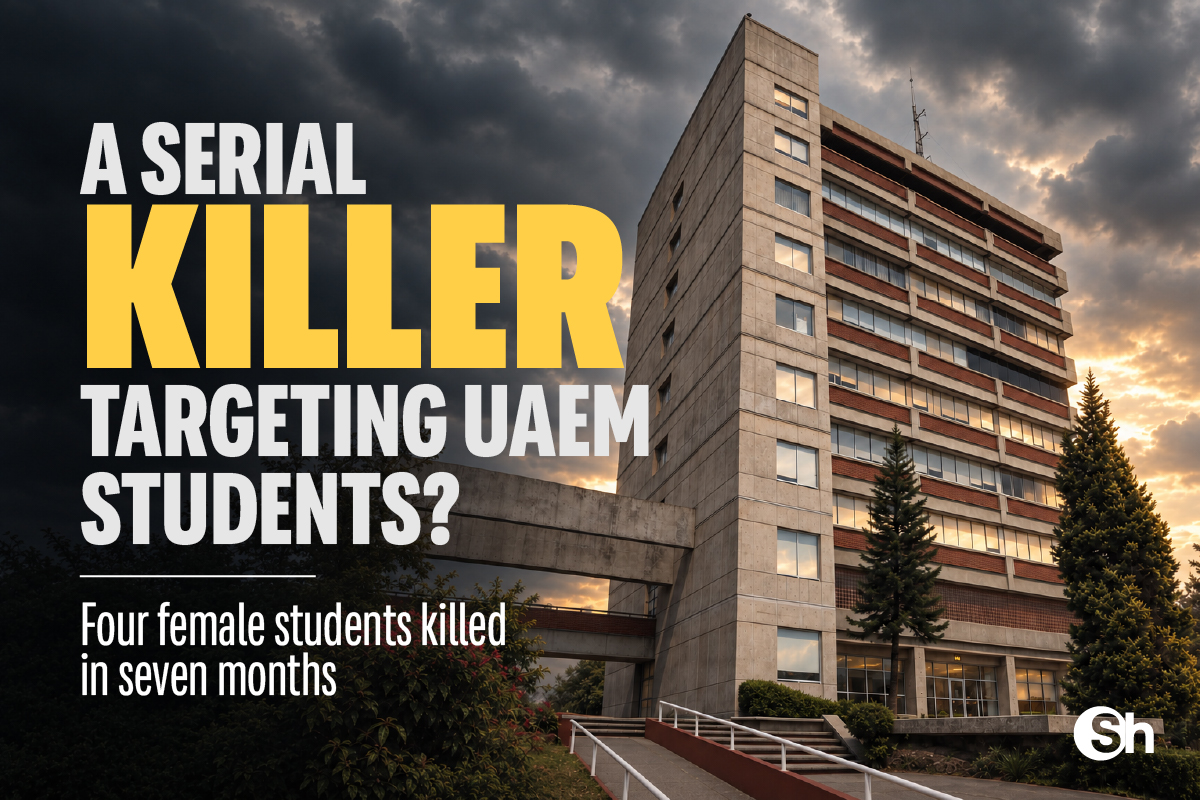
Claudia is the fourth student linked to UAEM to be killed in just seven months. Before her came Kimberly Joselin Ramos, Karol Toledo and Michelle Fuentes. Expand the timeline to 2025, and other media accounts include Aylin Rodríguez, bringing the number to five.
The crimes occurred in different municipalities and under different circumstances. There is no public evidence that they were committed by the same person. But there is a disturbing common thread: Kimberly, Karol and Michelle disappeared before they were found dead.
A suspect has been detained in connection with Kimberly’s killing. He is presumed innocent unless proven guilty. But four students killed in such a short period demand an answer as to whether authorities have scientifically compared the case files, injuries, genetic evidence, communications and locations connected to the crimes.
There is not enough evidence to say a serial killer is targeting UAEM students. But neither should authorities simply assume these are unrelated crimes without an investigation capable of proving it.
Claudia’s killing internationalized the tragedy. Spain demanded justice, and the University of Granada made a decision devastating to Mexico’s image: it canceled upcoming student exchanges to Morelos. The Spanish university has also said it was unaware of the previous student killings.
When a European university stops sending students after one of its own is murdered, this is no longer simply a security problem. It is a question of international confidence in Mexico.
The four students are part of a much larger tragedy. Morelos recorded 21 femicides between January and July 2026 and had Mexico’s second-highest femicide rate, even as authorities highlighted a decline in overall homicides.
Then there is another number Mexico cannot ignore: more than 133,000 people remained officially missing or unaccounted for, according to Mexico’s national registry as analyzed by Data Cívica in August.
That does not mean they were murdered, nor is there evidence that the government is deliberately classifying homicides as disappearances. But until a missing person is found dead, that person is not counted as a homicide victim. Mexico cannot measure the scale of its violence simply by counting the bodies it has already found.
All of this comes amid serious questions about Mexico’s justice system. Javier Laynez Potisek, a former Mexican Supreme Court justice, recently said the reform Mexico truly needed should have focused on police, prosecutors and forensic services. Those concerns come alongside domestic and international criticism over judicial independence.
That is why these killings should go beyond the ordinary investigation of a state prosecutor’s office. Mexico should request the involvement of an independent, specialized international body to review the cases, through the appropriate legal mechanisms for international cooperation.
An international review could compare forensic evidence and potential patterns. If the crimes are unrelated, it could help establish that. If investigators have missed a connection, it could help uncover one.
President Claudia Sheinbaum has expressed regret over Claudia’s killing and said federal security authorities are assisting Morelos prosecutors. That is the expected institutional response. But given the scale of the problem, it is no longer enough.
Four students killed. Three disappeared before being found dead. Twenty-one femicides in Morelos. More than 133,000 missing across Mexico. A foreign student who came to study and will return to Spain in a coffin. And a European university that has canceled exchanges.
This is not normal. It cannot be minimized. Mexico should not accept it.
We do not know whether there is a serial killer. That is precisely why these cases require an independent, scientific investigation with international credibility.
Claudia was Spanish, and her murder made the world look at Morelos. Kimberly, Karol and Michelle were Mexican. Their deaths deserved exactly the same outrage. Mexico should not need the murder of a foreign student to recognize a tragedy already unfolding at home.
The real scandal would be four students killed in seven months — and Mexico, out of pride, negligence or institutional failure, refusing to ask for help to find out who is killing them.